


India UK FTA 2026
For UK brands and retailers, sourcing from India can offer access to a large and diverse manufacturing base, but expanding an Indian supplier network also brings challenges around quality, production control and delivery.
The India UK FTA 2026, formally known as the UK–India Comprehensive Economic and Trade Agreement (CETA), entered into force on 15 July 2026. The agreement provides significantly improved market access, with 99% of Indian goods entering the UK either benefiting from duty-free access or reduced tariffs. Textiles, apparel, leather and footwear are among the sectors expected to see increased trade opportunities under the agreement.
For UK businesses considering sourcing from India, this creates new opportunities. This article explains what the India UK FTA means for textile and apparel sourcing, the key opportunities and risks for UK buyers, and how independent third-party inspection in India can support better supplier quality control.
Why the India UK FTA Matters for UK Sourcing
The India–UK CETA represents a significant change in the trading environment between the two countries. The agreement is designed to make trade more competitive and easier while improving market access between the two economies.
For UK brands and retailers sourcing apparel and textiles, the potential business impact includes:
- Improved tariff access: Lower or eliminated tariffs can improve the cost competitiveness of qualifying Indian products.
- Greater sourcing opportunities: UK buyers may have stronger incentives to explore or expand sourcing relationships with Indian manufacturers.
- Supplier diversification: Businesses can consider India as part of a broader sourcing strategy rather than relying heavily on a single country or supplier base.
- Growth in labour-intensive sectors: Textiles, apparel, leather and footwear are among the sectors expected to see increased trade opportunities under the agreement.
- Potentially broader supplier networks: As sourcing interest develops, buyers may evaluate additional factories and manufacturing partners across India.
- Improved trade facilitation: CETA introduces measures intended to make customs procedures more predictable and facilitate trade between the UK and India.
However, tariff benefits alone do not guarantee a successful sourcing program.
A lower landed cost can improve commercial competitiveness, but UK buyers still need to ensure that products meet agreed specifications, quality standards, testing requirements and delivery schedules.
This becomes especially important when a buyer is working with multiple factories or onboarding new suppliers.
A supplier that offers an attractive price but delivers inconsistent quality, production delays or specification deviations can ultimately increase the buyer’s overall sourcing cost.
For this reason, the growth of UK sourcing from India should go hand in hand with strong supplier evaluation and quality-control processes.
Key Benefits and Insights for UK Apparel and Textile Buyers
The India UK FTA creates an opportunity to reassess India as a sourcing destination. For UK businesses in fashion, apparel, textiles and related sectors, the agreement can support a more competitive sourcing environment.
1. India becomes more attractive for textile and apparel sourcing
India already has a broad manufacturing ecosystem covering cotton, synthetic textiles, garments, home textiles, leather and footwear. The CETA provides significant tariff advantages for Indian exports to the UK, including products from labour-intensive sectors such as textiles, leather and footwear.
For UK buyers, this can make India worth considering when reviewing existing sourcing strategies.
Potential sourcing categories include:
- Garments and apparel
- Knitwear
- Woven garments
- Home textiles
- Cotton products
- Man-made fibre products
- Leather goods
- Footwear
- Accessories

However, each product must meet the applicable tariff classification and rules of origin requirements to receive preferential treatment. The FTA contains product-specific rules governing originating goods.
2. Supplier quality becomes increasingly important
When a company expands sourcing from a new market, supplier qualification is one of the first challenges.
UK buyers may need to assess:
- Factory production capacity
- Manufacturing processes
- Quality-control systems
- Technical capabilities
- Production planning
- Workforce and machinery
- Previous production performance
- Compliance requirements
- Product testing capabilities

A factory audit in India can provide an independent assessment before a buyer commits significant production volume to a supplier.
Supplier evaluation is particularly useful when a UK company is considering several factories and needs to identify which suppliers can meet its requirements.
3. Production monitoring can reduce avoidable shipment risks
Even after a supplier has been approved, production performance can change from one order to another.
Raw-material delays, production bottlenecks, workmanship issues and specification deviations can become difficult and expensive to correct when identified only at the end of production.
This is where DUPRO inspection in India and production monitoring can provide valuable visibility.
An independent inspection during production can help buyers identify issues earlier, allowing suppliers and buyers to take corrective action before the final shipment stage.
4. Final inspection protects shipment quality
Before goods leave the factory, UK buyers need confidence that the finished products meet the agreed requirements.
A Final Random Inspection (FRI) can help verify aspects such as:
- Product workmanship
- Measurements and specifications
- Appearance
- Functionality
- Quantity
- Packaging
- Labelling
- Carton details
- Major and minor defects
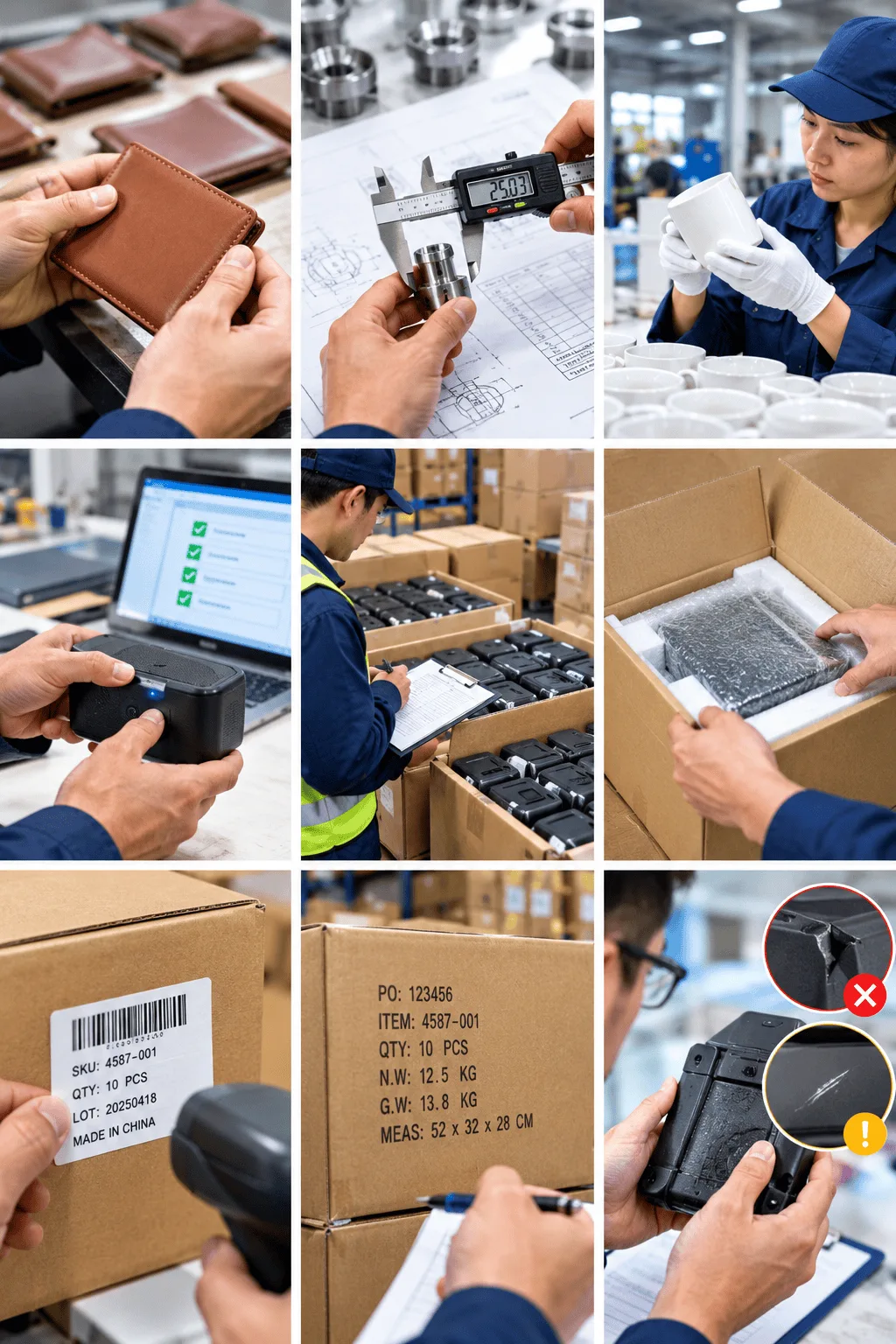
The purpose is not simply to find defects. It is to provide buyers with independent information about the condition of the order before shipment.
For UK companies managing suppliers remotely from the UK, this additional visibility can be particularly valuable.
5. Quality control should support—not replace—the FTA opportunity
The India UK FTA can improve the commercial environment for trade, but successful sourcing still depends on supplier capability and execution.
The strongest sourcing strategy therefore combines:
FTA benefits + capable suppliers + quality control + production monitoring + compliance + shipment readiness.
For UK buyers expanding their Indian supplier network, independent inspection can become an important part of this process.
Why Choose RSJ Inspection Services
For UK businesses sourcing from India, having an experienced independent inspection partner can provide greater visibility across the supply chain.
RSJ Inspection Services provides independent third-party inspection services in India, supporting buyers with quality and supplier-control requirements across different stages of production.
Our services include:
- Factory Audits & Supplier Evaluations
- Pre-Production Inspections
- DUPRO / Production Monitoring
- Final Random Inspections
- Product Inspections
- Laboratory Testing Coordination
- Compliance Audits
- Technical Audits

RSJ supports international buyers by helping identify quality and production risks at the source rather than waiting until goods reach the destination market.
For UK brands, retailers, importers and sourcing companies, this can provide an independent layer of quality control when working with Indian suppliers.
The objective is simple: better visibility, stronger supplier control and greater confidence in shipments from India.
Conclusion
The India UK FTA 2026 creates a new commercial environment for businesses trading between India and the UK. With significantly improved tariff access and textiles, apparel, leather and footwear among the important beneficiary sectors, UK buyers have new reasons to evaluate and potentially expand sourcing from India.
But successful sourcing is about more than tariff savings. Supplier capability, product quality, production progress, compliance and shipment readiness remain critical to protecting a buyer’s investment and customer expectations.
RSJ Inspection Services helps UK brands, retailers and sourcing companies manage these risks through factory audits, supplier evaluations, pre-production inspections, DUPRO, final inspections, testing coordination and compliance audits across India.
If your business is exploring or expanding sourcing from India, contact RSJ Inspection Services to discuss your third-party inspection and supplier quality-control requirements.
RSJ Inspection Services : Contact Us | RSJ Inspection